
Loading...

Strategic Guide for Gulf CTOs: Enterprise-Grade OpenAI API Integration

Strategic Guide for Gulf CTOs: Enterprise-Grade OpenAI API Integration

Mohamed Zid
December 09, 2025
5 min read
23 views

For CTOs across the Kingdom of Saudi Arabia and the UAE, the mandate has shiftedrapidly from "exploring AI" to "deploying AI at scale." National initiatives, such as Saudi Vision 2030 and the UAE National Strategy for Artificial Intelligence 2031, have created an environment where technological adoption is not just encouraged; it is an accelerated imperative. However, the bridge between ambition and execution is fraught with architectural challenges, particularly concerning security, latency, and regulatory compliance.

Integrating generative AI into enterprise workflows is rarely a plug-and-play operation. It requires a rethink of traditional data pipelines. This briefing focuses specifically on the strategic and technical realities of OpenAI API integration for Gulf enterprises, moving beyond the hype to discuss robust implementation patterns that yield measurable business value.

The Mechanics: Beyond the Prompt

At its core, an OpenAI API integration is a RESTful architectural pattern. However, treating it like a standard microservice is a mistake that leads to runaway costs and poor performance. For the enterprise CTO, understanding the nuances of model selection (e.g., GPT-4o for complex reasoning vs. embeddings models for semantic search) is crucial.

A successful integration relies heavily on managing context windows effectively. Every token sent and received carries a cost and a latency penalty. Engineering efficient prompts and managing conversational state on your middleware—rather than relying on the API to "remember"—is essential for building scalable applications. You are not just connecting to an endpoint; you are engineering cognitive capabilities into your existing infrastructure stack.

Strategic OpenAI API integration connecting enterprise infrastructure with cognitive services.

Strategic Business Impact in the Gulf Region

For regional enterprises, the value of OpenAI API integration lies in moving beyond simple customer service chatbots into core operational optimization. We are seeing significant traction in sectors like finance, logistics, and government services where high volumes of complex Arabic data require processing.

Intelligent Process Automation (IPA)

Traditional Robotic Process Automation (RPA) is brittle; it breaks when interfaces change. By injecting LLM capabilities via API, workflows become resilient. The AI can interpret unstructured data—such as vendor emails or regulatory documents—and make probabilistic decisions to route tasks appropriately. This is fundamental to optimizing business process workflows for agility in the Gulf market.

Semantic Search and Knowledge Management

Many Gulf enterprises sit on vast, disconnected data lakes. By utilizing OpenAI's embedding models, you can convert internal documentation, policies, and historical project data into vector databases. This allows employees to query internal knowledge bases using natural language and receive synthesis, not just search results. This turns dormant data into an active asset.

Hyper-Personalization at Scale

In regional retail and fintech, consumer expectations are rising. An integrated API layer allows for real-time personalization of user journeys based on behavioral data, generating dynamic content or financial advice that respects cultural nuance and language specifics.

Implementation Blueprint: Security and Sovereignty

This is where most integrations fail in the Gulf. The primary concern for any CTO operating in KSA or UAE is data sovereignty and security. Connecting directly from a client-side application to OpenAI is an unacceptable risk.

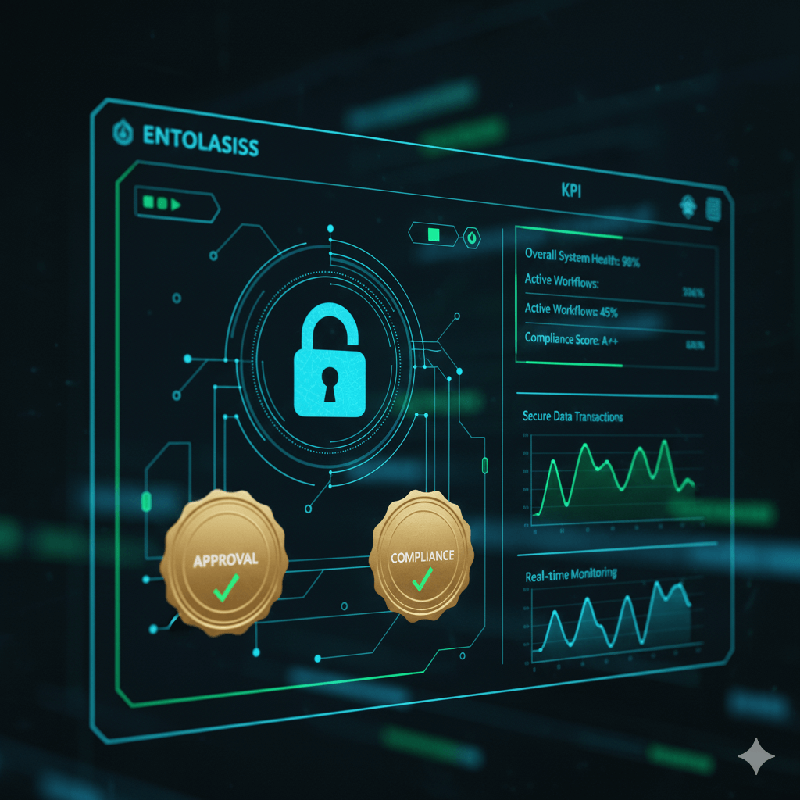
Secure data center infrastructure supporting compliant OpenAI API integration in the Gulf.

The Middleware Mandate

Enterprise integration requires a robust, secure middleware layer located within your compliant infrastructure (whether on-prem or a regional cloud instance). This layer acts as the gatekeeper between your internal data and OpenAI's servers.

Your middleware must handle:

  • PII Redaction: Before any prompt is sent to the OpenAI API, Personally Identifiable Information (PII) must be identified and redacted or pseudonymized to comply with regulations like the UAE Data Law or KSA's NDMO standards.
  • Rate Limiting and Caching: To control costs and improve latency, frequently asked questions or repeated tasks should be cached locally.
  • API Key Management: Never embed keys in front-end code. Keys should be managed via secure vaults in your backend infrastructure, rotating regularly.

Addressing OWASP Top 10 for LLMs

Security practices must evolve. CTOs need to familiarize their teams with the OWASP Top 10 for Large Language Model Applications. Specifically, defending against "Prompt Injection"—where malicious user input tricks the AI into revealing sensitive data or performing unauthorized actions—is paramount. Your middleware must include sanitization logic to prevent these attacks.

For companies looking to build secure, smart IT solutions, partnering with experienced integrators who understand these specific security vectors is critical. You can read more about our approach to secure implementations at Megoverse.

Conclusion: The Path Forward

OpenAI API integration is no longer an experiment; it is a competitive differentiator. For Gulf enterprises, the key to success lies not just in accessing the models, but in wrapping them with a secure, compliant enterprise architecture that respects regional data sovereignty. The goal is to build systems where AI enhances human decision-making without compromising security.

At Megotech, we specialize in navigating the complex intersection of advanced AI capabilities and stringent enterprise requirements. To discuss how we can architect your AI integration strategy, contact our enterprise team today.

Frequently Asked Questions (FAQ)

1. Will OpenAI train their models on our private enterprise data?

By default, OpenAI does not use data submitted to their business API for training or improving their models. This is a crucial distinction from their consumer ChatGPT interface. However, you must ensure your enterprise agreement confirms this data usage policy to satisfy compliance auditors.

2. How do we handle latency for real-time applications in the region?

Latency is a reality with LLM APIs. To mitigate this, optimize your prompts to be concise, utilize streaming responses to improve perceived performance for the end-user, and geographically locate your middleware layer as close as possible to both your users and the API endpoints. Caching common responses is also highly effective.

3. Should we fine-tune a model or use Retrieval-Augmented Generation (RAG)?

For 90% of enterprise use cases in the Gulf, RAG is superior to fine-tuning. RAG allows you to ground the AI's responses in your current, private data via vector search without the massive expense and maintenance burden of retraining a model. It ensures answers are accurate and up-to-date.

4. How does local regulation in KSA or UAE impact this integration?

Regulations regarding data residency are strict. You must ensure that highly sensitive classified data does not leave the country. A properly architected middleware layer allows you to classify data on the fly, ensuring only non-sensitive, redacted information is transmitted to international API endpoints for processing.

Share this post

Related Posts

How Workflow Automation Is Transforming Modern Businesses
Automation & Integrations Nov 07

How Workflow Automation Is Transforming Modern Businesses

In today’s fast-paced digital world, businesses are constantly looking for ways to do more with less. Workflow automation is no longer a luxury — it’s a necessity. In this post, MeGoTech explores how automation tools like n8n and custom integrations are helping companies improve productivity.

WhatsApp Call Now