Loading...

Optimizing Business Process Workflow for Enterprise Agility in the Gulf

Optimizing Business Process Workflow for Enterprise Agility in the Gulf

Mohamed Zid
November 29, 2025
5 min read
111 views

As a CTO operating in the high-growth environments of Saudi Arabia or the UAE, you already know that rapid digitalization isn't optional—it's a mandate driving national agendas like KSA's Vision 2030. Yet, I frequently see a significant disconnect in large enterprises: ambitious frontend digital strategies shackled by manual, disconnected backend operations.

The friction caused by inefficient processes is no longer just a productivity issue; it's a massive compliance risk and a scalability bottleneck. Whether you are preparing for mandatory ZATCA phase 2 e-invoicing integrations in KSA or ensuring adherence to the UAE’s Federal Decree-Law on Personal Data Protection, relying on spreadsheets and email chains to manage critical operations is unsustainable.

A robust, automated business process workflow is the necessary nervous system for a modern Gulf enterprise. It is the difference between struggling to keep up with regulatory changes and seamlessly integrating them into business-as-usual operations.

Moving Beyond Static Maps to Dynamic Orchestration

Too often, organizations view a business process workflow as a static Visio diagram stored on a SharePoint server. That is documentation, not operational reality. A true enterprise workflow is a dynamic, orchestrated system where data, tasks, and approvals flow automatically between diverse systems—ERP, CRM, HRIS—and human stakeholders based on predefined logic.

It means moving away from point-to-point integrations that create technical debt and toward an API-led architecture that allows for flexible process re-engineering. When a process is digitized correctly, it becomes measurable, auditable, and optimizable.

To understand the deeper impact of this shift, explore our insights on how workflow automation transforms modern businesses.

The Strategic Business Impact in the Gulf Context

For CTOs in this region, investing in workflow optimization delivers returns in three critical areas.

1. Guaranteed Regulatory Compliance and Data Sovereignty

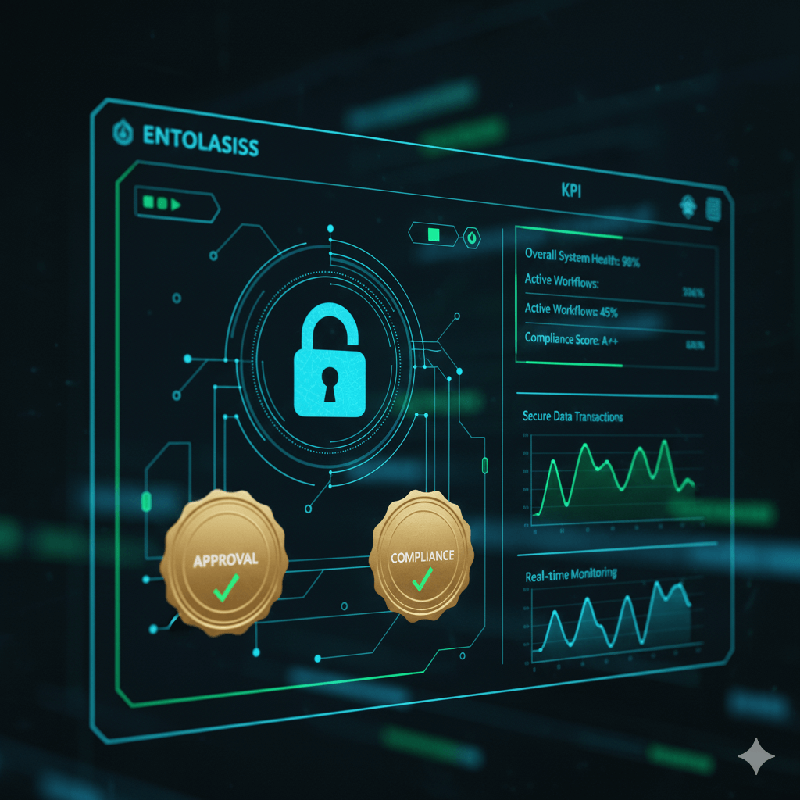
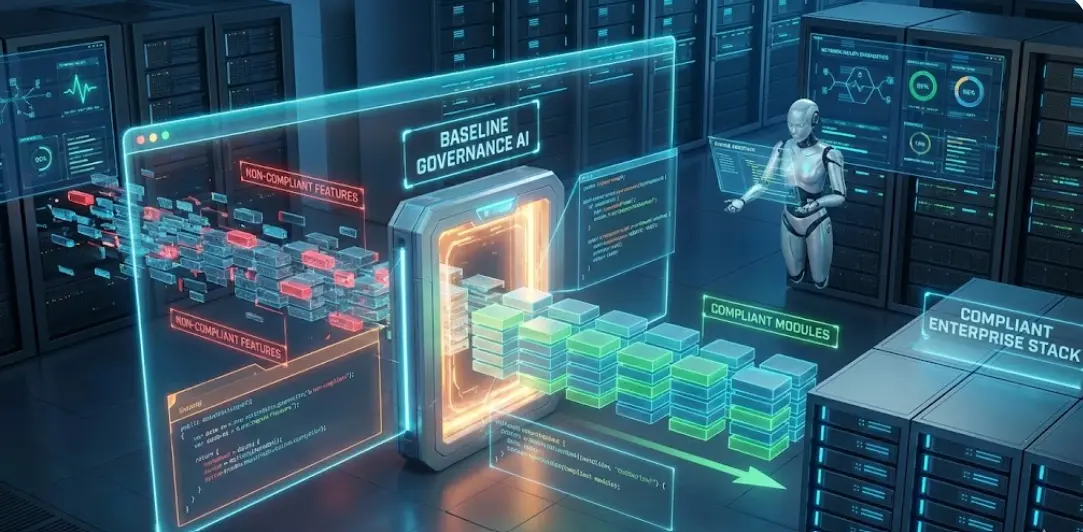
In the Gulf, compliance is dynamic. Manual processes inevitably lead to human error, missed steps, and data leakage. An automated business process workflow enforces compliance by design. You can bake regulatory requirements—such as data residency rules preventing certain customer data from leaving KSA borders—directly into the process logic.

Every step is logged, creating an immutable audit trail essential for demonstrating compliance to regulators. This security-first approach aligns with global best practices found in standards like OWASP for secure systems design.

Analytics dashboard showing business process workflow performance data on a tablet.

2. Scalability Without Proportional Headcount Growth

As your enterprise expands across the MENA region, you cannot afford to hire linearly with growth for administrative tasks. Automated workflows handle increased transaction volumes—be it procurement requests, customer onboarding, or financial reconciliation—without adding back-office stress. This allows you to redirect your talent toward strategic initiatives rather than process administration.

3. Speed to Value and Market Agility

How long does it take to onboard a new B2B vendor? How fast can you approve a complex quote? Inefficient workflows mean slow cycle times, giving agile competitors an edge. By automating handoffs and parallelizing tasks, you significantly reduce end-to-end process time, accelerating your ability to deliver value to the market.

An Implementation Strategy for the Modern CTO

Implementing enterprise-grade workflow automation isn't just a software purchase; it's an operational upheaval. Based on our experience at Megotech delivering complex solutions, here is the recommended roadmap.

Phase 1: The Brutal Process Audit

Do not automate a mess. Before writing a single line of code or configuring a low-code platform, you must rigorously analyze current state processes. Identify bottlenecks, redundant approvals, and shadow IT workarounds. We often find that 30% of process steps in large enterprises add no actual value.

Phase 2: Standardization and Modernization

Once the process is optimized on paper, define the technology stack. Will you use a dedicated Business Process Management (BPM) suite or build microservices-based orchestration? Your choice relies heavily on your existing infrastructure. Ensure your underlying tech is future-proof; review the top tech stacks to master for guidance on modern architectures.

Developer writing code to implement technical business process workflow automation.

Phase 3: Intelligent Automation and Integration

Start with high-impact, low-complexity processes to prove ROI. Focus on deep integration. A workflow that doesn't write back to your core ERP is merely a notification system. This requires a skilled technical team capable of handling complex API integrations and ensuring data integrity across systems.

If you lack the internal capacity for this level of engineering, consider engaging our specialized technical experts to augment your capabilities.

Conclusion

In the current Gulf business climate, a seamless business process workflow is not a luxury; it is the foundation of a resilient, compliant enterprise. It turns operational friction into competitive velocity. The cost of inaction—measured in failed audits, slow operations, and frustrated employees—is far higher than the investment in modernization.

Do not let legacy processes define your future velocity. If you are ready to discuss how to restructure your critical workflows for the next phase of growth, contact our enterprise team today for a strategic consultation.

Frequently Asked Questions by CTOs

Q: We have significant legacy infrastructure. Can we still modernise our workflows without a complete rip-and-replace?

A: Absolutely. In fact, a "big bang" replacement is rarely advisable. Modern workflow orchestration layers can sit on top of legacy systems, interacting with them via middleware or robotic process automation (RPA) where APIs don't exist. This allows you to modernize the process experience immediately while gradually decoupling the backend. Review our services page for approaches to legacy modernization.

Q: How do we ensure automated workflows comply with evolving Gulf data residency laws?

A: Data sovereignty must be architected into the workflow. Your orchestration layer needs to be geo-aware, ensuring that data processing and storage for specific workflows remain within required national boundaries (e.g., utilizing local cloud regions in KSA or UAE). This is a critical architectural decision during the design phase.

Q: What is a realistic timeframe to see ROI from a workflow automation project?

A: While it varies by complexity, most enterprises see significant ROI within 6 to 12 months post-deployment through reduced cycle times and error rates. The key is targeting high-volume, repetitive processes first. You can view examples of our delivered impact in our project portfolio.

Share this post

Related Posts

How Workflow Automation Is Transforming Modern Businesses
Automation & Integrations Nov 07

How Workflow Automation Is Transforming Modern Businesses

In today’s fast-paced digital world, businesses are constantly looking for ways to do more with less. Workflow automation is no longer a luxury — it’s a necessity. In this post, MeGoTech explores how automation tools like n8n and custom integrations are helping companies improve productivity.

WhatsApp Call Now